Your story stays private
Share only what you are comfortable sharing about the relationship.
Two families, two sets of customs
You grew up with different food, festivals and ways of speaking to elders. Between the two of you it has mostly been interesting. Now families are involved, and small differences are starting to feel like tests. Couples in Lucknow from different backgrounds often reach this point.
Your story stays private
Share only what you are comfortable sharing about the relationship.
A calm second view
Feelings, timing and next steps are looked at one by one.
Talk from anywhere
Phone or video, so distance is not a barrier for you.
No false hope
You hear what the chart suggests, not a promised result.
Think of a couple visiting one set of parents for the first time. One partner greets everyone the way they would at home, which here seems too casual. A dish is declined politely and taken as an insult. On the journey back, one says, "You could have tried harder." The other says, "Nobody told me the rules."
Customs feel natural to the people who grew up with them and invisible until someone does not follow them. A partner from another background is not being disrespectful by not knowing. But families may read it that way, and the couple can end up defending their own side instead of standing together.
A consultation lets you talk through which customs matter most to each family and to each of you personally. Many families in this situation also ask for Kundli matching, which can be included. It is one traditional input. How you blend two ways of living is for you both to work out.
Tell your partner in advance what your family expects: greetings, food, dress, topics to avoid. It prevents most missteps.
Some customs are easy to adopt. Others touch personal belief. Say where your limits are, kindly.
Agree that you will not criticise each other in front of family, and will discuss problems privately afterwards.
Write down the customs in your family that you think matter most, and the ones you are unsure about. The main service page explains the session and the optional chart reading.
How the consultation worksTake responsibility for explaining your own family's ways. Your partner cannot guess them.
Decide how you will respond to remarks. A calm, united reply from both of you ends most of them.
Adapting does not mean erasing yourself. Keep the practices that matter to you and explain why.
Each of you is the guide to your own family. Before a visit, walk your partner through what to expect, including small things. Afterwards, thank them for the effort before mentioning what went wrong. People try harder when the attempt is noticed.
Talk between yourselves about the future as well: which festivals you will keep, what you will cook at home, how you would raise children. You will not settle everything, and you do not have to. Knowing each other's strongest feelings prevents surprises later. If either family uses threats or force over your choice of partner, seek support from people or services you trust.
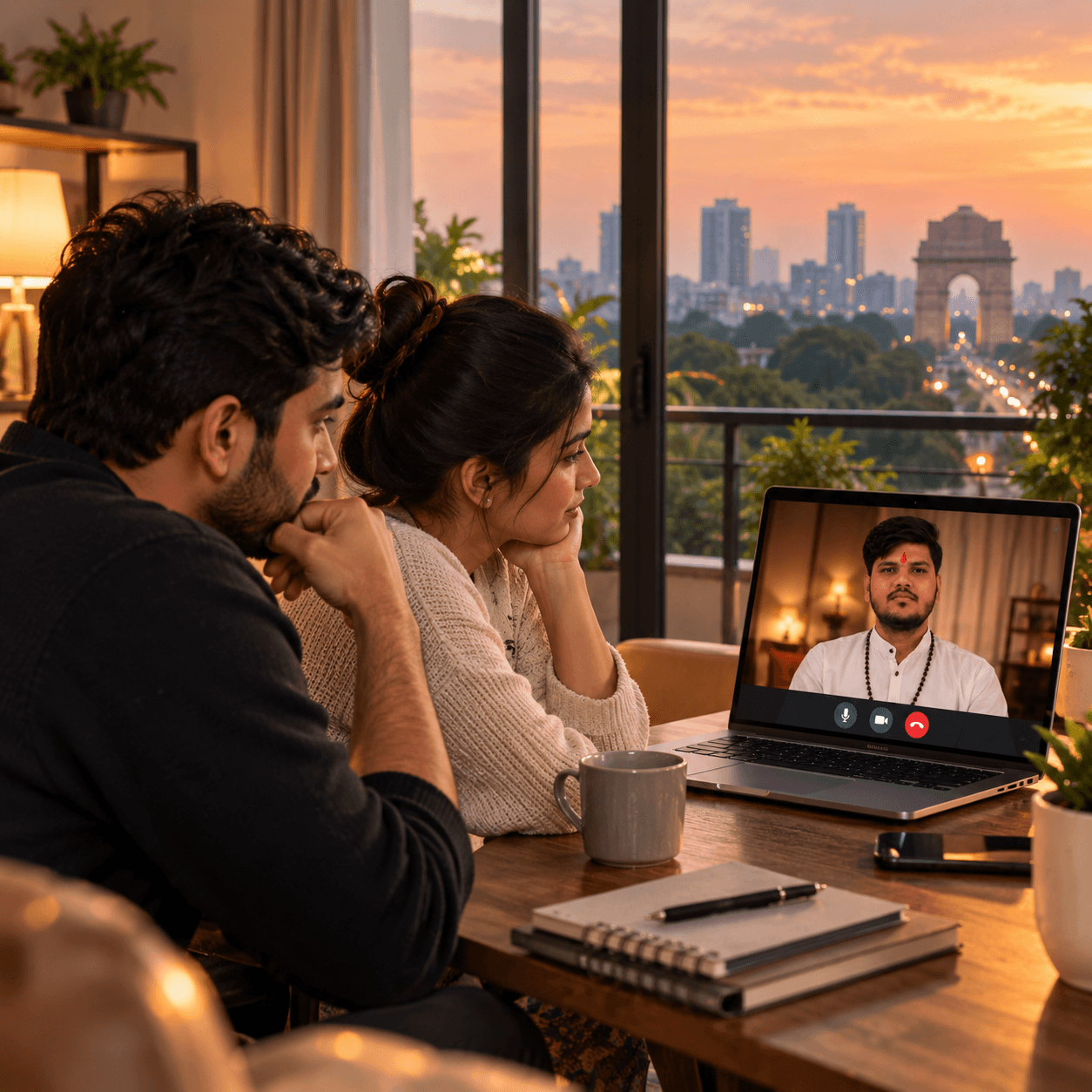
Consultations are online, so both of you can join from Lucknow or from different places. We start from your situation as it is. For Kundli matching, accurate birth details for both partners are needed and shared only with consent.
Many do. It takes explanation, patience and a clear sense that the two of you are on the same side.
It is understandable and also a lot to ask. Discuss with your partner what they are willing to adopt, then speak to your family together.
For families who value it, yes, and it can be included. It does not decide whether you should be together.
Acceptance often grows slowly. Focus on respectful contact and on your own unity. Some distance from disapproving relatives may be needed for a time.